

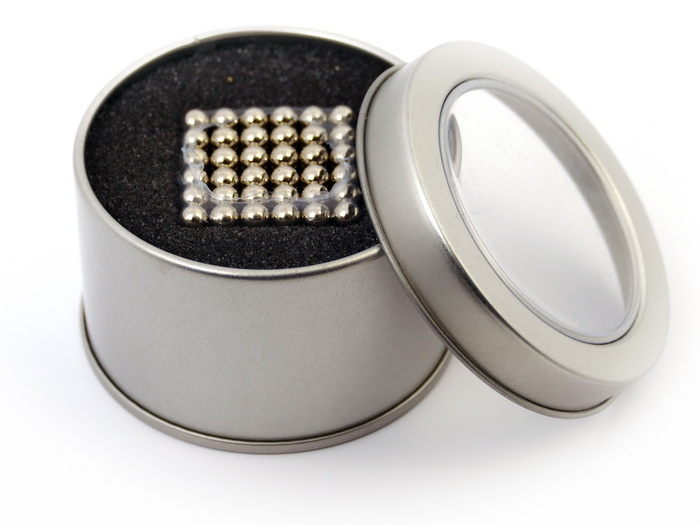




The name of these magnets comes from the presence of the rare earth element neodymium (Nd) in the alloy.
Among all known ferromagnetic alloys, this one has the highest residual magnetization Br, coercive force Hc and maximum magnetic energy (MH)max. Due to their extremely high magnetic characteristics and relatively low price, these magnets are increasingly used in powerful electric motors and generators, miniature sensors and converters, fastening elements, etc.
Their main disadvantage is the low maximum operating temperature, which for the pure Nd-Fe-B alloy is 80-100°C, but with the help of some additives (mainly cobalt Co) an increase to 200°C is achieved.
WARNING!
Neodymium magnets are very hard, relatively fragile and at the same time with a great force of attraction to each other.
Therefore, in order to avoid injuries and accidents when When working with large neodymium magnets, please follow these rules:
- Do not let two neodymium magnets fall freely against each other. This will cause a strong impact and breakage of the magnets.
- If possible, work with leather gloves and safety glasses. Thus, in the event of a “pinch” of two magnets, you will largely protect your fingers, and in the event of an accidental drop and impact between the magnets, the flying pieces will not get into your eyes;
- It is desirable that there are no iron objects on the workbench, as well as magnetic cards, electronics and magnetically sensitive devices in the immediate vicinity;
- Separate them carefully by sliding them apart. After separating one magnet, move it far enough away from the other magnets or iron objects;
- The magnets should be reattached to each other or to an iron surface very carefully and smoothly by sliding, holding firmly;
- If you are temporarily placing them on an iron surface, place a non-magnetic material 3-5 mm thick under them;
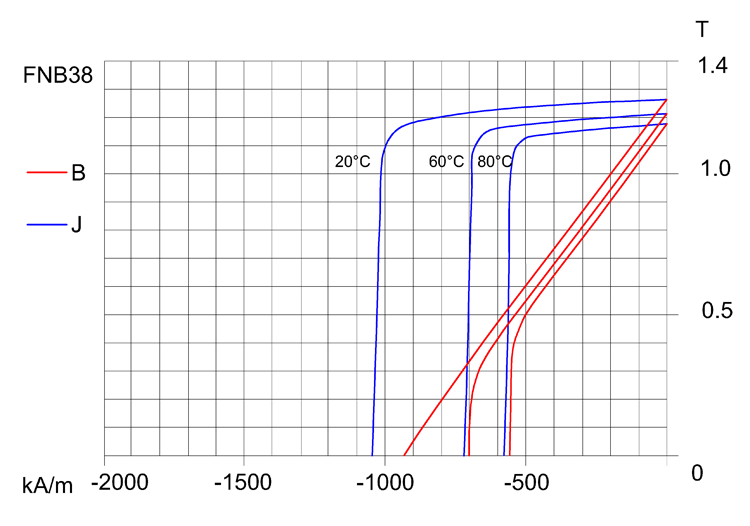
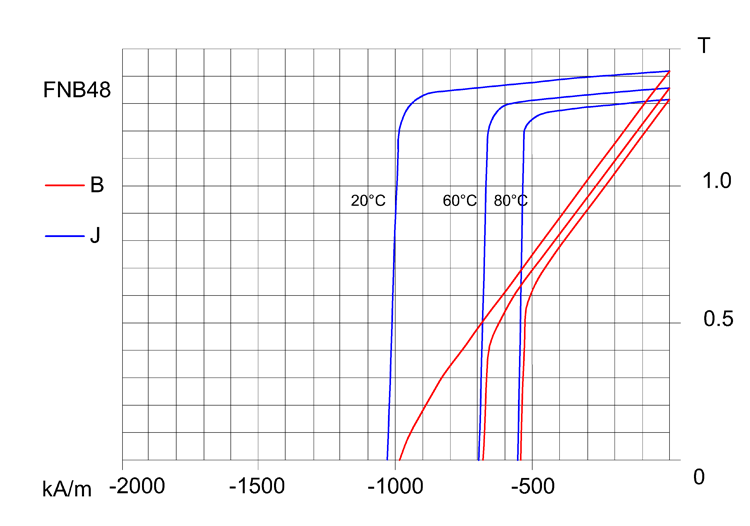
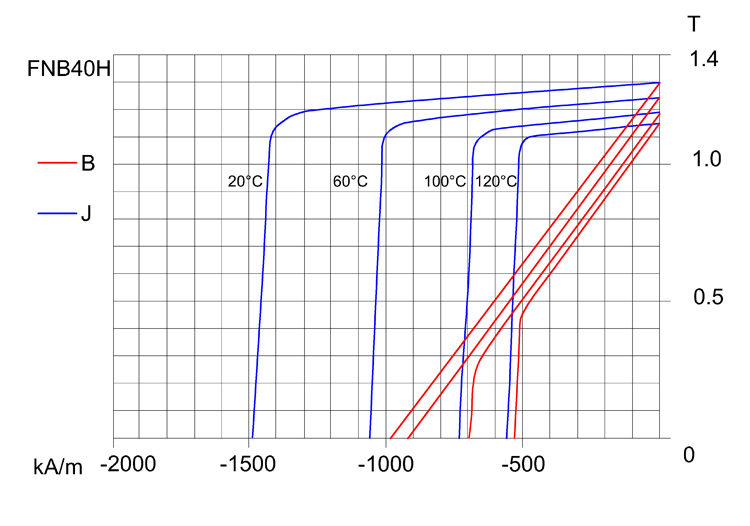
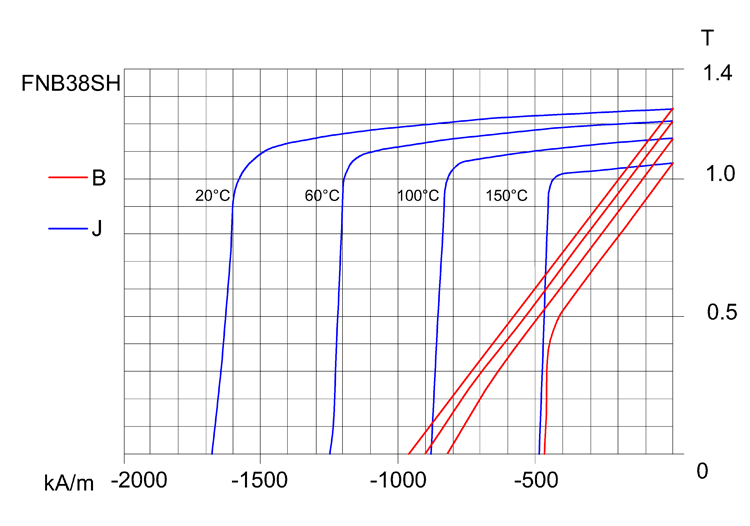
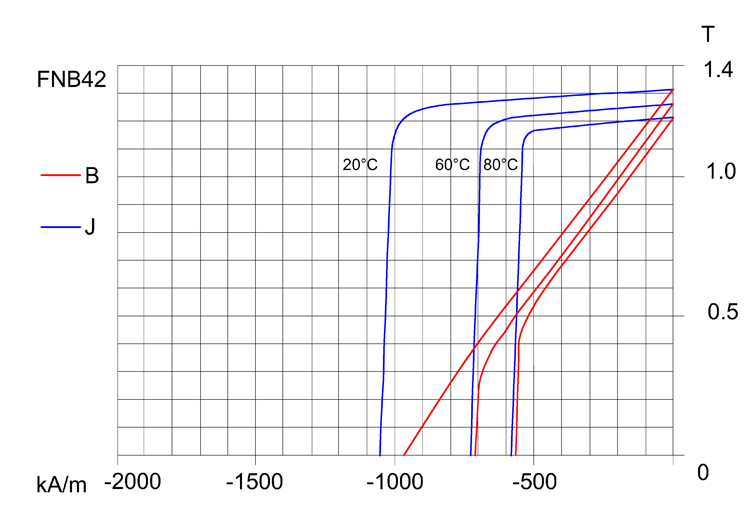
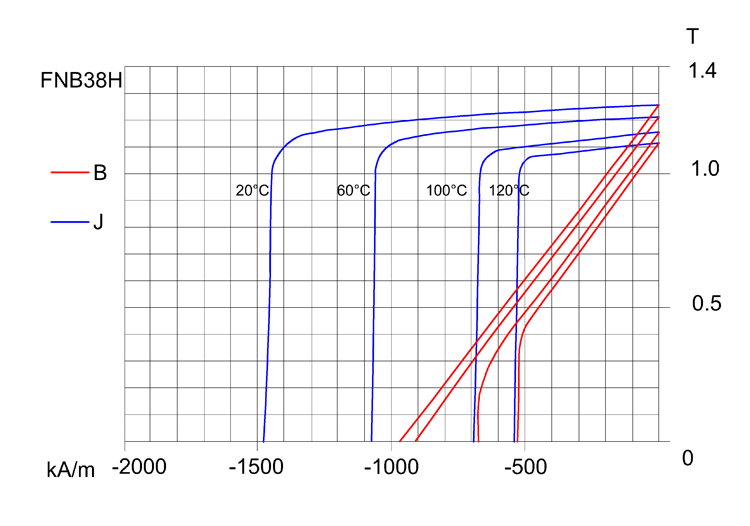
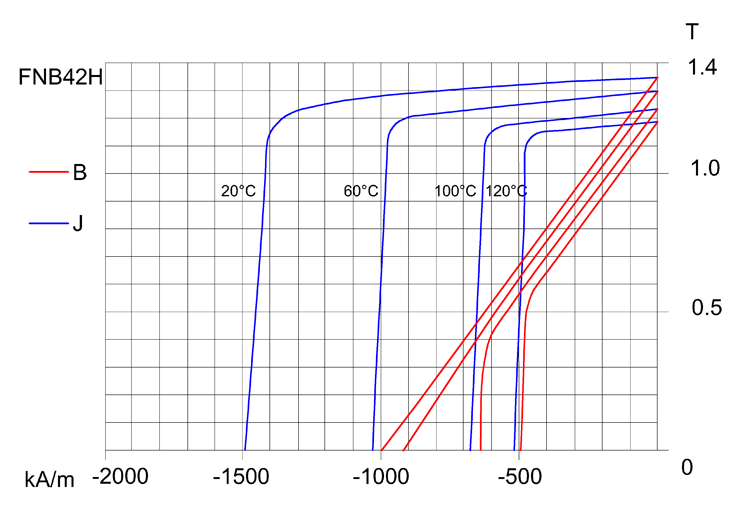
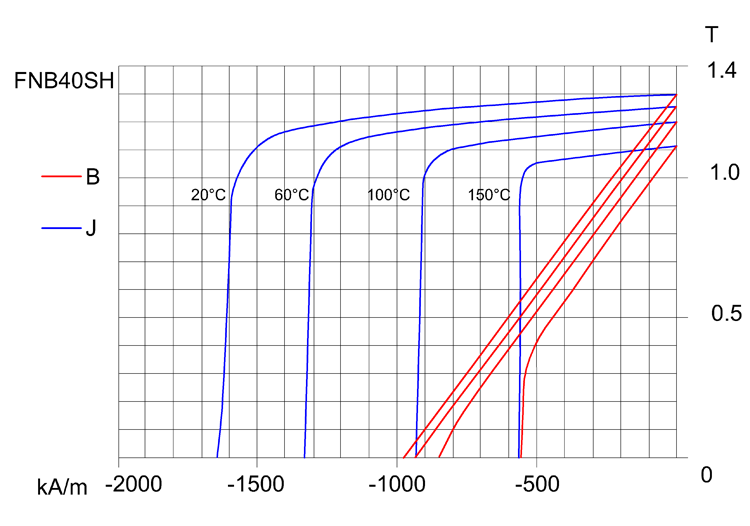
The table and graphs below give the magnetic characteristics and demagnetization curves of the neodymium magnets we offer.
|
Material |
Br |
bHc |
jHc |
(B.H)max |
Maximum operating temperature |
||||
|
kG |
T |
kOe |
kA/m |
kOe |
kA/m |
MGOe |
kJ/m³ |
°C |
|
|
NFB 38 |
12.6 |
1.26 |
11.2 |
891 |
12 |
955 |
38 |
302 |
80 |
|
NFB 42 |
13.3 |
1.33 |
11.2 |
891 |
12 |
955 |
42 |
334 |
80 |
|
NFB 48 |
14.1 |
1.41 |
10.8 |
859 |
11 |
875 |
48 |
382 |
80 |
|
NFB 50 |
14.6 |
1.46 |
10.8 |
859 |
11 |
875 |
51 |
405 |
80 |
|
NFB 38M |
12.6 |
1.26 |
11.5 |
915 |
14 |
1114 |
38 |
302 |
100 |
|
NFB 42M |
13.3 |
1.33 |
11.5 |
915 |
14 |
1114 |
42 |
334 |
100 |
|
NFB 48M |
14.3 |
1.43 |
11.5 |
915 |
14 |
1114 |
48 |
390 |
100 |
|
NFB 30H |
11.4 |
1.14 |
10.2 |
812 |
17 |
1353 |
30 |
239 |
120 |
|
NFB 38H |
12.6 |
1.26 |
11.5 |
915 |
17 |
1353 |
38 |
302 |
120 |
|
NFB 42H |
13.3 |
1.33 |
11.5 |
915 |
17 |
1353 |
42 |
334 |
120 |
|
NFB 30SH |
11.4 |
1.14 |
10.2 |
812 |
20 |
1592 |
30 |
239 |
150 |
|
NFB 38SH |
12.6 |
1.26 |
11.5 |
915 |
20 |
1592 |
38 |
302 |
150 |
|
NFB 42SH |
13.3 |
1.33 |
11.5 |
915 |
20 |
1592 |
42 |
334 |
150 |
|
NFB 28UH |
10.8 |
1.08 |
10.2 |
812 |
25 |
1989 |
28 |
223 |
180 |
|
NFB 33UH |
11.7 |
1.17 |
11.0 |
875 |
25 |
1989 |
33 |
263 |
180 |
|
NFB 35UH |
12.2 |
1.22 |
11.2 |
891 |
25 |
1989 |
35 |
279 |
180 |
|
NFB 28EH |
10.8 |
1.08 |
10.2 |
812 |
30 |
2387 |
28 |
223 |
200 |
|
NFB 30EH |
11.4 |
1.14 |
10.6 |
844 |
30 |
2387 |
30 |
239 |
200 |
|
NFB 33EH |
11.7 |
1.17 |
11.0 |
875 |
30 |
2387 |
33 |
263 |
200 |
 Cylindrical neodymium magnets
 Block Neodymium Magnets
 Neodymium magnets with screw hole
 Neodymium balls
 another shape – Neodymium magnets